Can Liverpool Claw Back Their Season? Expectations vs Reality


After their worst run of form in 70 years, Liverpool’s season looked close to unravelling before it had even begun. A run that saw confidence drain from both players and supporters raised serious questions about whether the defending champions were capable of mounting any kind of meaningful recovery.
Fast forward a few months and the picture has shifted. Liverpool are now unbeaten in 10 matches and sit fourth in the Premier League, holding a two-point cushion over the chasing pack.

On paper, that suggests stability. In reality, it highlights the uncomfortable gap between expectation and achievement.
As reigning champions, simply finishing in the top four does not constitute a successful season. Liverpool set their own standards last year, and those standards were defined by silverware. For many supporters, anything short of lifting a trophy will feel like a step backwards, regardless of league position.
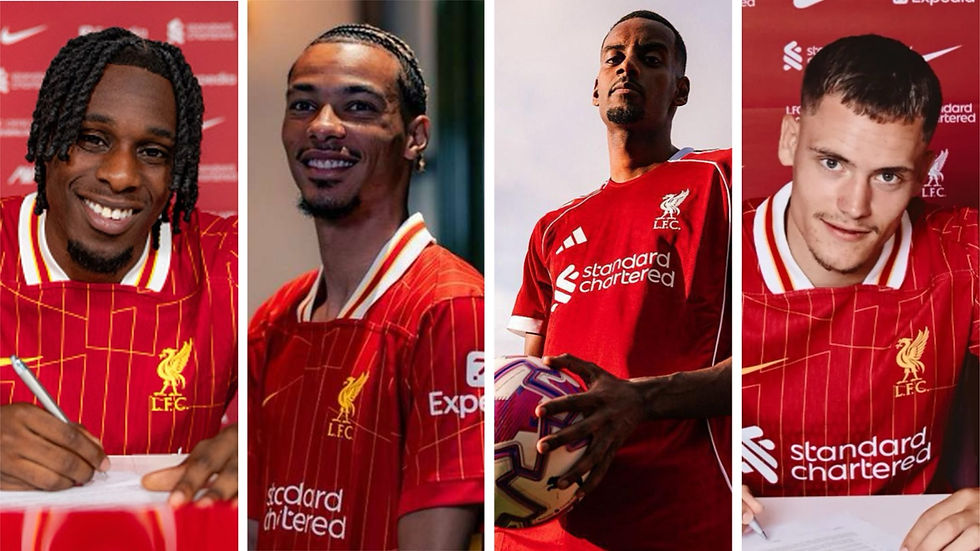
That feeling is amplified by the scale of Liverpool’s summer spending. Around £450 million was invested in the transfer window, yet key first-team players were allowed to leave without being properly replaced. While the outlay suggested ambition, with star players such as Alexander Isak and Florian Wirtz being signed, the squad still lacks depth, with obvious weaknesses exposed as the season has progressed.

Injuries have played a major role. At right-back, Conor Bradley’s season-ending bone and ligament damage has left Liverpool short of reliable options in a position already lacking depth. Central defence has faced similar disruption, with Joe Gomez’s persistent fitness issues once again affecting continuity. Giovanni Leoni’s ACL injury has ruled him out for the entire campaign, leaving Liverpool without genuine backup options at centre-back.
Up front, the absence of Isak has been a significant blow. The club’s marquee summer signing is sidelined until at least late March or early April with a fractured leg, leaving Liverpool reliant on Hugo Ekitike.

However, Ekitike has also missed the last two fixtures with a minor muscle injury, depriving the side of a focal point at a time when attacking cohesion has been inconsistent at best.
Despite their unbeaten run, Liverpool have not been convincing. They are grinding out results rather than dominating matches, often looking short of ideas and intensity. Avoiding defeat has kept them competitive, but performances suggest a side operating below its potential.
There is, however, a counterargument rooted in recent European history. Paris Saint-Germain showed last season that a slow start does not automatically rule out Champions League success.

Liverpool midfielder Dominic Szoboszlai referenced that example when speaking about the title race.
“I will never give up, not even the championship, but we have to think realistically, as we are 14 points behind Arsenal,” he said. “If we look at it, last year PSG barely made it out of the regular season of the Champions League and they won it in the end why can’t we be what they are now?”
Belief remains within the squad, but belief alone does not fix structural issues. Liverpool’s reluctance or inability to address clear gaps has been a recurring theme.

Missing out on Marc Guéhi on deadline day was a significant setback, and his potential move to Merseyside now appears increasingly unlikely.

Other admired targets have slipped through their grasp, with Antoine Semenyo joining Manchester City, further highlighting the competitive disadvantage Liverpool face in the market.
Any assessment of Liverpool’s season must account for the broader context. This is only Arne Slot’s second campaign in charge, and the squad is still adjusting to new tactical demands. At least five players are first-team signings integrating into both the team and the system, a process that has inevitably affected fluency and consistency.

That lack of cohesion has been evident at times, particularly in matches where Liverpool have struggled to impose themselves despite remaining unbeaten. Injuries have further disrupted continuity, forcing regular changes across the back line and limiting stability in key areas. In that sense, the current run of results reflects resilience more than refinement.
Expectations, however, remain high. Liverpool are defending champions, and significant investment over the summer has raised standards externally as well as internally.

A top-four finish alone may feel underwhelming, but viewed through the lens of transition, squad turnover and long-term planning, it could represent progress rather than regression.
The measure of success this season may ultimately rest on trajectory rather than position.

Clear signs of tactical development under Slot, improved cohesion among new signings and competitive runs in Europe and the FA Cup would suggest Liverpool are laying foundations. Whether this season is remembered as recovery or reset will depend on how convincingly that progress materialises.



Comments