Manchester United’s Endless Cycle of Sackings: Is Ownership the Root Cause?
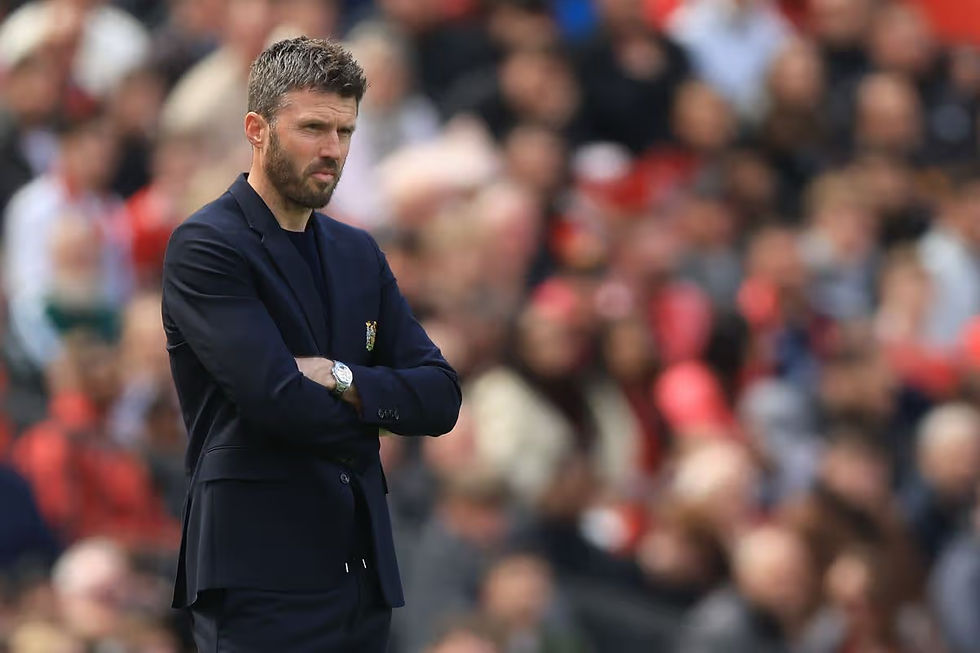
Michael Carrick has been sacked after a record-low Premier League finish this season, having won only a single fixture, drawn five and lost four matches. Manchester United now sit in 18th place in the Premier League table, for the first time since the 1974/75 season under Tommy Docherty.
In the last ten years, they have had nine different managers, including permanent, caretaker and interim bosses. During this transitional period, United have won five major trophies.
This included FA Community Shield, FA Cup and UEFA Europa League titles with José Mourinho in 2016/17. Their next trophies were in 2022/23 under permanent manager Erik ten Hag, winning the EFL Cup and FA Cup.
Carrick had given United fans a glimmer of hope at the end of the 2025/26 Premier League season, winning five of their final six matches and qualifying for the Champions League. United finished with 71 points, sitting third in the table; this raises the question of where the club went wrong.
How have they found themselves in the same cycle for the last decade?
United have often been criticised for their quick dismissal of managers, and I believe there is some truth to this. To understand how United have been unable to break this managerial curse, I will walk you through the management of the club in the last ten years and the Glazers’ influence on managerial decisions.
José Mourinho’s Complex Two-Year Managerial Spell

Mourinho has won 26 major trophies during his managerial career, two of which were earned at United. The Portuguese coach has been known to have a toxic relationship with board owners and has clashed with key players such as Paul Pogba. He faced extensive battles with vice-chairman Ed Woodward, disputes that directly stemmed from policies and vetoes imposed by the club owners and the Glazer family.
A major issue Mourinho faced was his proposals for the centre-back and wide-forward positions in the squad. After finishing second in the 2017/18 Premier League table, Mourinho submitted a list of target players, including Toby Alderweireld, Harry Maguire and Ivan Perišić. However, he faced major backlash from owners who refused to pay ‘inflated’ fees and ended up signing full-back Diogo Dalot and midfielder Fred.
This arguably was just the beginning of United’s decade-long defensive crisis.
Mourinho publicly complained throughout pre-season that he wasn’t being backed to close the gap on rivals Manchester City.
Eventually, the board sacked Mourinho, pushing back against his requests to spend more after having already spent £375 million, including Victor Lindelöf and Eric Bailly. The Glazers made it clear they preferred younger, marketable players with high resale value.
They were also reportedly angered by Mourinho’s constant media complaints during pre-season and believed they were damaging United’s global brand.
Ole Gunnar Solskjær and His Consecutive Losses

Former United striker Ole Gunnar Solskjær was the next appointed manager to take on United’s growing instability. Under Ole, United had bagged some big names that positively impacted their performance, such as Maguire (£80m) and Aaron Wan-Bissaka (£50m).
However, this wasn’t enough to remedy United’s struggling backline.
Once again, United’s defensive issues were the squad's key vulnerability. The high defensive lines in this squad were repeatedly exposed due to slow recovery and an absence of a natural holding midfielder to shield the back four.
Ole was dismissed after losing five consecutive games, including significant home fixtures against Liverpool (0–5) and Manchester City (0–2).
United again found themselves in the same position, and the owners' solution was the same – a new manager.
United’s Interim Managers
Ralf Rangnick was hired as an interim manager from December 2021 to May 2022 and resigned at the end of the season after overseeing United’s lowest points tally at the time (58) and missing Champions League qualification.
Rangnick’s squad lacked the tactical discipline to press as a unit, resulting in major gaps between midfield and defence and a total of 57 goals conceded.
Erik ten Hag was the next man to attempt to revive United, but it was no easy feat.
Despite winning the Carabao Cup (2023) and FA Cup (2024), ten Hag was dismissed in October 2024 after an abysmal start to the 2024/25 Premier League season, with three wins in nine games.
The squad suffered a historic injury crisis, losing Lisandro Martínez, Luke Shaw, Tyrell Malacia and Raphaël Varane. This forced him to adapt to over 30 different defensive combinations.
Ruben Amorim was the Glazers’ next selection, but the problems from previous coaches only followed him.
Amorim was dismissed after 14 months in charge (November 2024–January 2026), having won 24 of 63 games. He was persistent in his 3-4-3 tactical approach, which didn’t mesh with the squad built for a back four. Additionally, the squad needed specialist wing-backs and wide centre-backs capable of defending in a three-person defence.
Michael Carrick: Expecting Results With No Flexibility From the Bosses – Was He Set Up for Failure?
Finally, United’s former midfielder was chosen to fix this depleted squad. Carrick was initially appointed until the end of the 2025/26 season and earned a two-year permanent contract after winning 12 out of 17 games to finish the season.
During Carrick’s pre-season, the ownership of the club was split between the Glazers in the US and Sir Jim Ratcliffe’s INEOS team.
Challenges he faced during pre-season were strict financial caps due to the club’s ongoing debt, which prevented the club from signing crucial defensive reinforcements.
The split governance also led to slow boardroom sign-offs, delaying the offloading of unwanted players.
Most significantly, the owners rewarded Carrick for securing Champions League revenue but failed him when it came to flexibility in their financial models to provide squad depth.
What Do I Think About Carrick’s Dismissal?
After analysing Manchester United’s managerial decisions, I believe dismissing Carrick was the wrong call. It is evident that the squad struggles to field consistently high-quality defensive players on the teamsheet; without this, United will continue to suffer with their tactical approach.
Cristiano Ronaldo touched on the subject of owner influence:
“The owners of the club – the Glazers – they don’t care about the club. I mean professional sport, as you know, Manchester is a marketing club. They will get their money from the marketing – the sport; they don’t really care, in my opinion.”
This can only be done by removing the Glazer family’s ownership, as they hold the power in decision-making, which could overhaul this team and bring it back to glory.


Comments